
CASE STUDY
Improving the User Experience for a Hollywood De-aging Software
What I was asked to solve for Vanity AI
Vanity AI was developed by MARZ VFX as a way to leverage AI to de-age and beautify actors in Hollywood films and streaming television. I was specifically hired to increase the throughput of visual effects shots by improving the usability of the tool. The plan was a publicly available beta in 4 to 5 months after I joined the company.
TEAM ROLE
-
Senior UX / Product Designer
-
Worked with 1 Engineer and 3 Machine Learning Researchers
RESPONSIBILITY
- Led all design efforts on the Product team
- Oversaw UX, Research, and Usability Studies
SCOPE
- Redesigned 3 Key Areas of the Interface and Flow for Product to Implement
- Updated Project page, Keyframe Editor and Bezier Masking Flow
IMPACT
- Saved artists 72% of working time per shot
- Enabled artists to increase shot output and lower cost of delivery
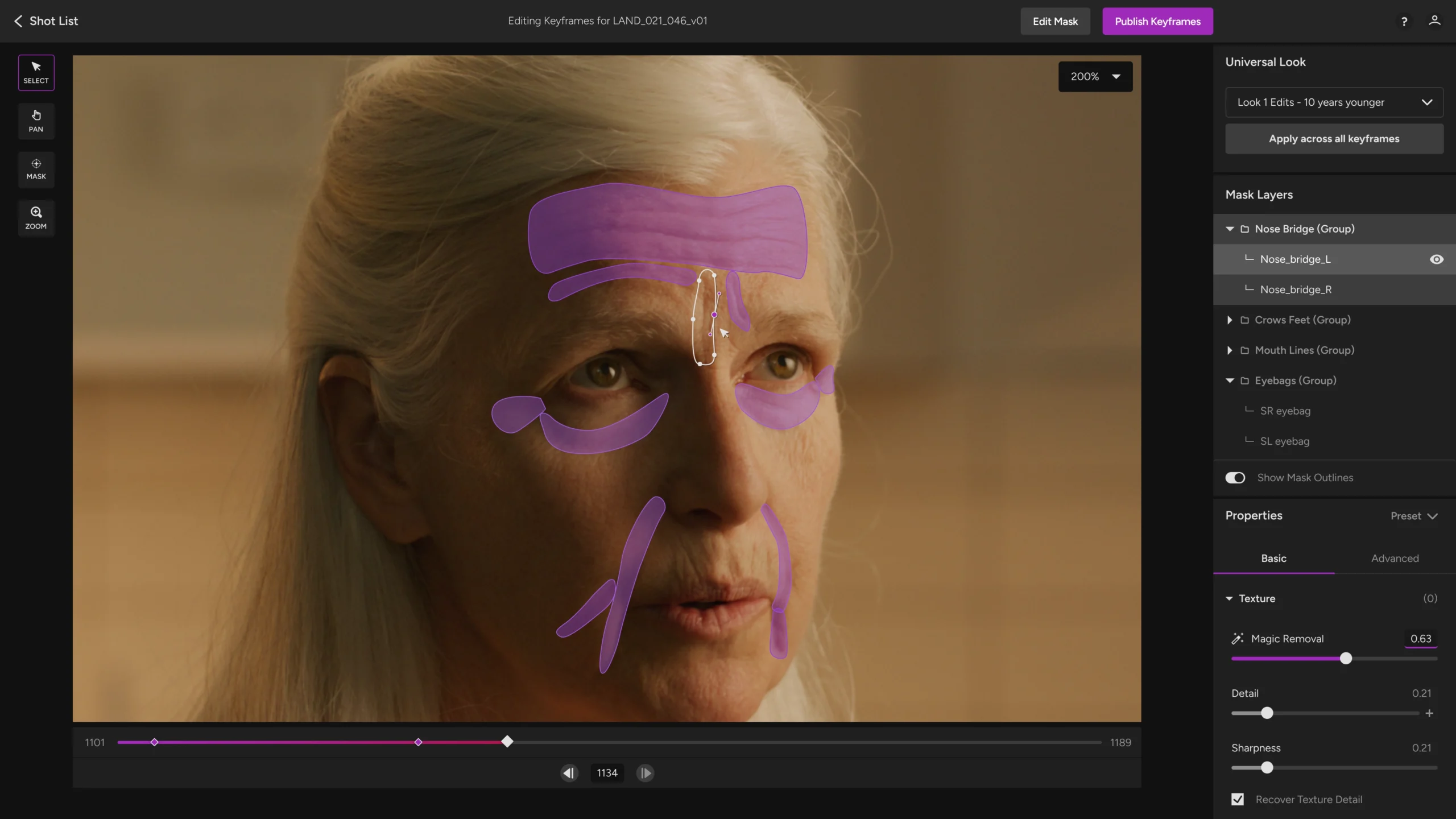
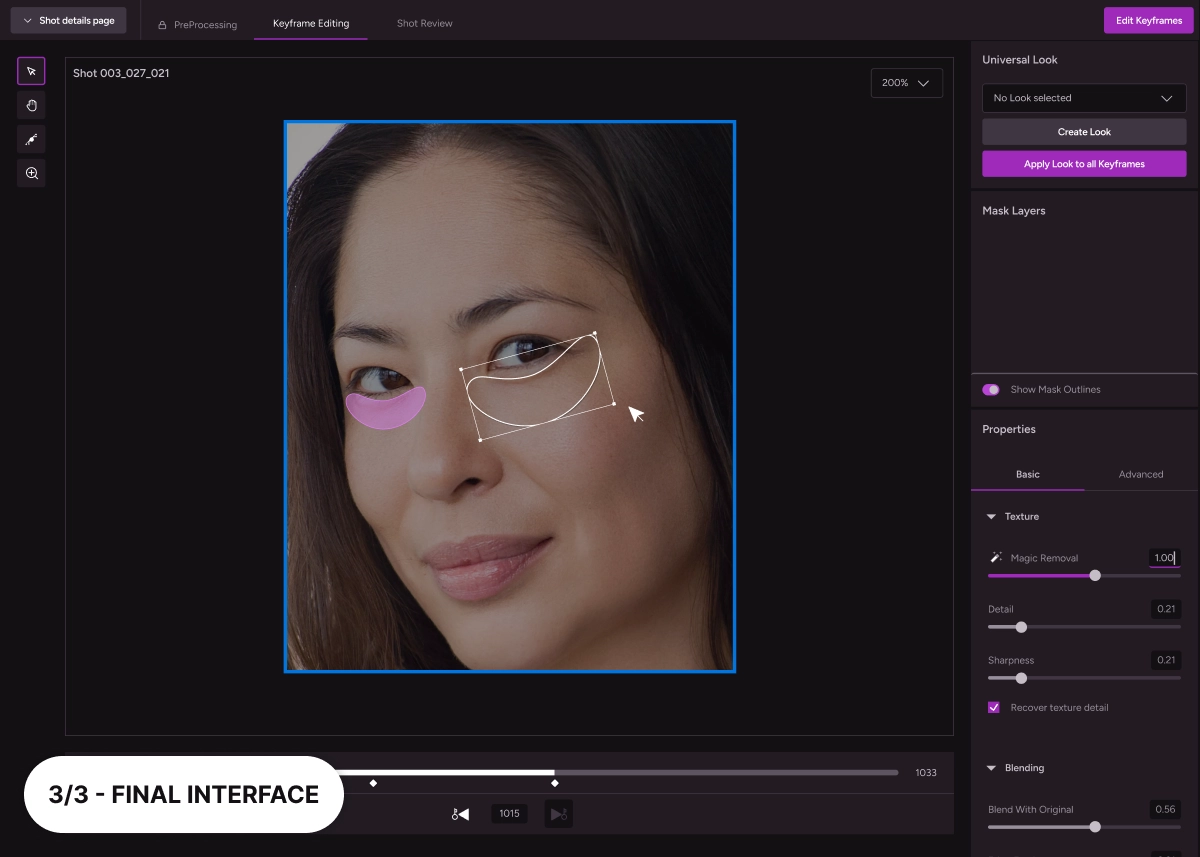
This is a mockup of the final interface, after incorporating all the changes as a result of extensive feedback and user testing.
THE PROBLEM
Vanity was clunky, slow, and barely usable by the VFX artists.
The machine learning researchers had built a great prototype around their proprietary machine learning model for skin retouching and digital de-aging. But they hadn’t spent enough time understanding the needs of MARZ’s internal visual effects and external post-production editors.
In 2023, Vanity was the only tool capable of working on shots the demanded the highest quality output for film companies:
- 4K resolution
- 16 or 32-bit color space
- EXR file format
However, artists struggled to use the tool itself, and shot turnaround time was still too long to show any benefits. Myself, and the Product Manager worked together to discover what was causing friction, and slowing down overall artist input.
RESEARCH PHASE
I decided to start with user research, and pinpoint the exact problems worth solving.
I interviewed & transcribed 12 post production professionals
Analyzed and mapped correlations between interviewees
Discovered the largest gaps between shot intake and final output
UNDERSTANDING THE USERS
Three personas started to emerge, with clear, sometimes conflicting, pain points.
These are the people I had to consider when redesigning the flow.
“Sometimes I’m asked to touch up the actor’s face at the last minute, and I need to make changes with the producer in the room on the big screen in real-time.”
“I need to make sure the final grade is approved before de-aging happens, otherwise I have to start all over again with my adjustments in DaVinci Resolve.”
“I need as many controls as possible inside one tool, so I’m not wasting time switching between Vanity and Nuke to final shots and get them ready for approval.”
However, one quote stood out to me. I realized we needed to solve for the VFX compositor first.
Why? Because they were closest to the final shot. If the other personas ran into difficulty, they would usually turn to VFX because they understood pixel-level detail the clearest. So I needed to directly address friction downstream.
“It takes so long to receive preprocessed shots that are assigned to me, I don’t have any control over the edge masks, and I have to adjust a looot of keyframes for every shot. It’s a real pain.”

DIAGRAMMING PHASE
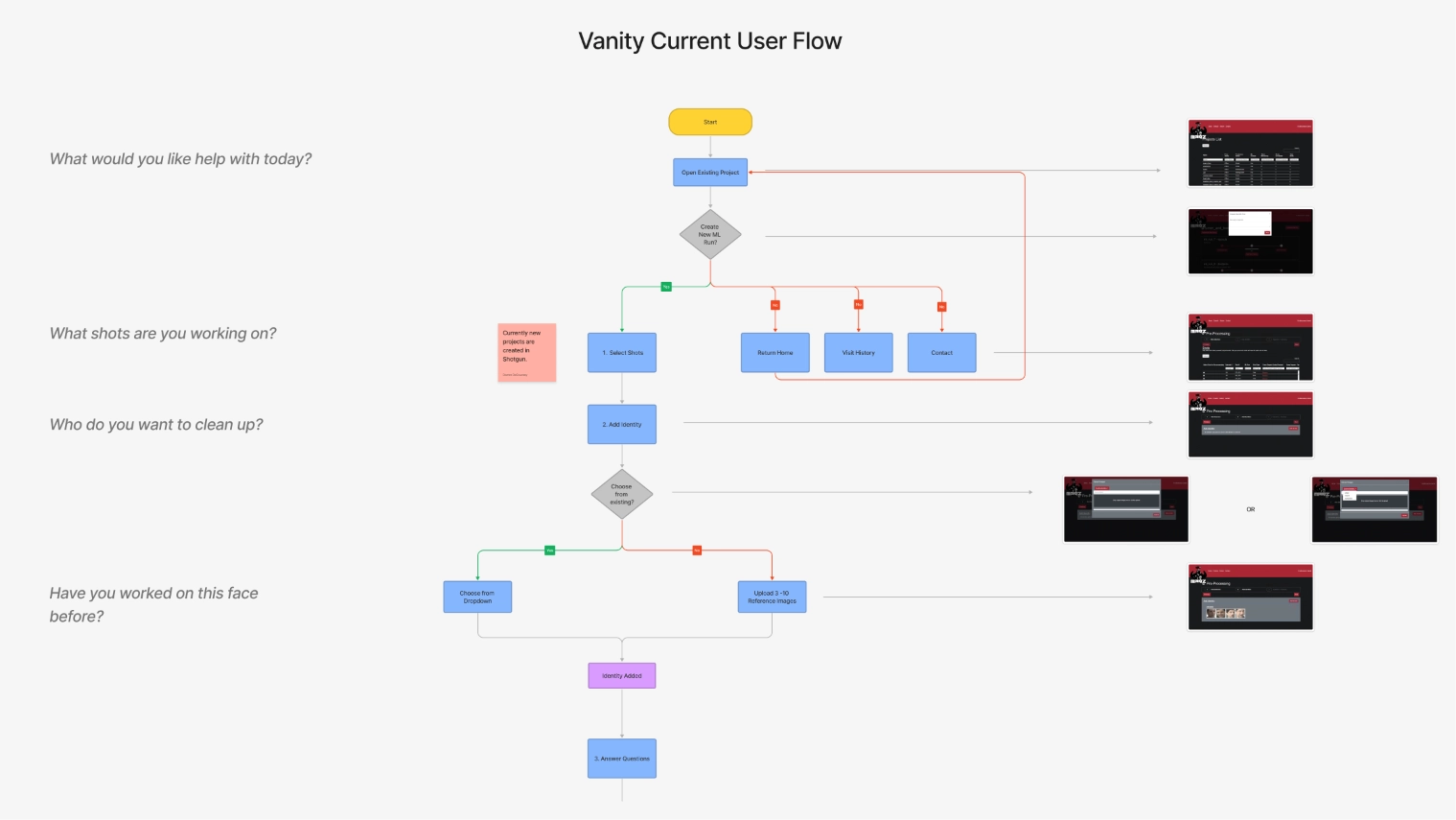
I mapped out the flow to empathize, and discover where these pain points were slowing artists down in their process.
ANALYSIS PHASE
Three key insights emerged: VFX artists were most impacted during setup, while editing masks, and right before finaling.
Each shot required “preprocessing” to prepare artists for working on the de-aging. They relied on a 3rd party tool called Shotgun for shot management, and they had to wait for every shot to preprocess before starting work, which could take hours.
When artists would draw mask shapes onto the wrinkles they needed to erase, they would have to add multiple points for each polygon with no smooth curves, and had to recreate them for each side of the face, often spending more than an hour tweaking across every shot.
Artists would agonize over the “last 10%” to make the pore detail, skin resolution and reconstructed edges as invisible to the audience as possible. They were often forced to do this work by exported the files into Nuke, which often added another hour to their workflow.
WIREFRAMING PHASE
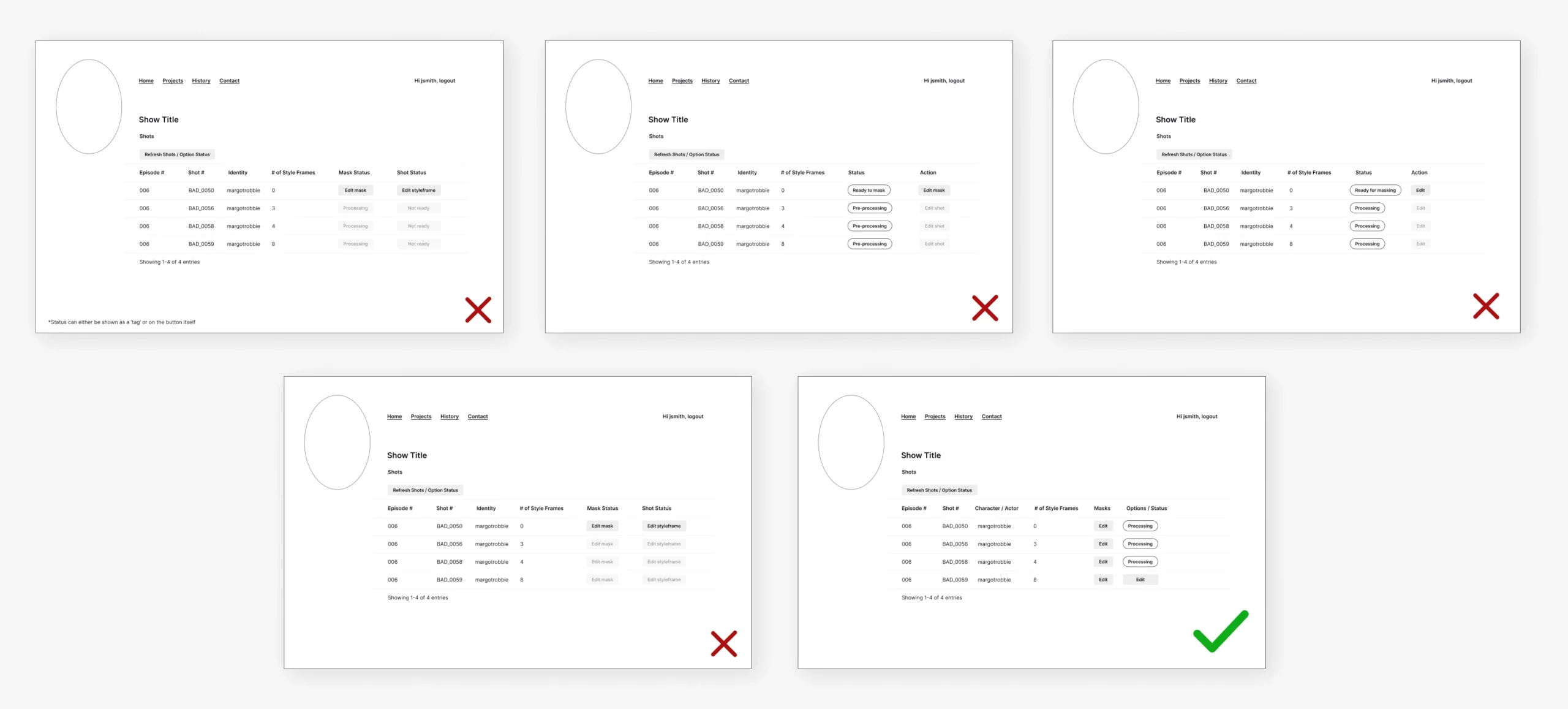
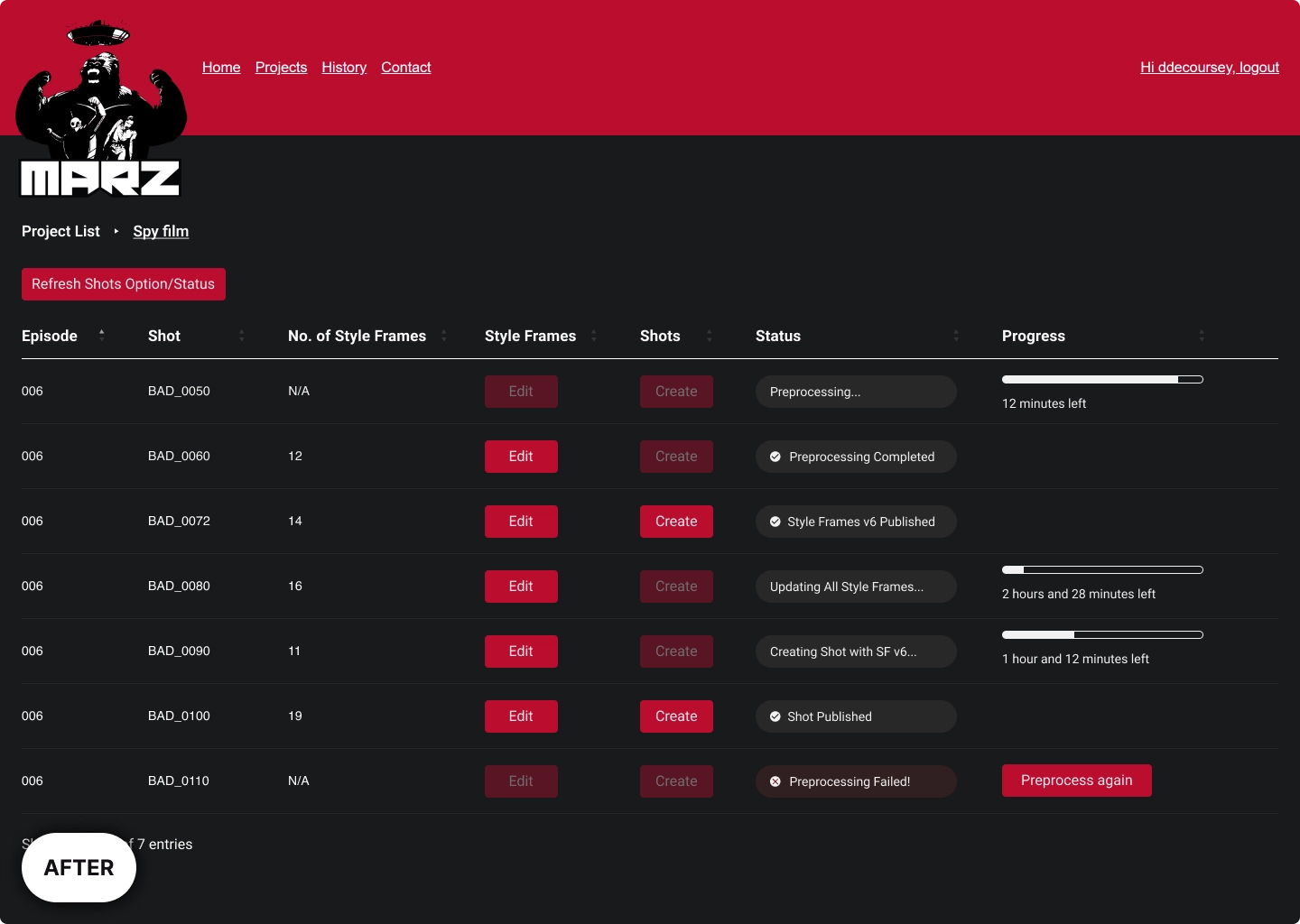
I tackled the projects page redesign first. Five options became two, and then one.
After getting feedback from various artists and observing their workflow, with the tool, the winning wireframes most clearly demonstrated two things: a) when the preprocessing was completed and b) when they could begin editing their masks and style frames.
While receiving feedback from artists, I stumbled into an important insight.
To make the machine learning process more efficient, shots were “batched” together and sent off to the GPUs. However, shots would often fail, and then whole sequence would have to be restarted.
By breaking out how shots could be preprocessed independently, artists could start on successfully preprocessed shots faster, while retrying others that failed, saving a great deal of time in the process.
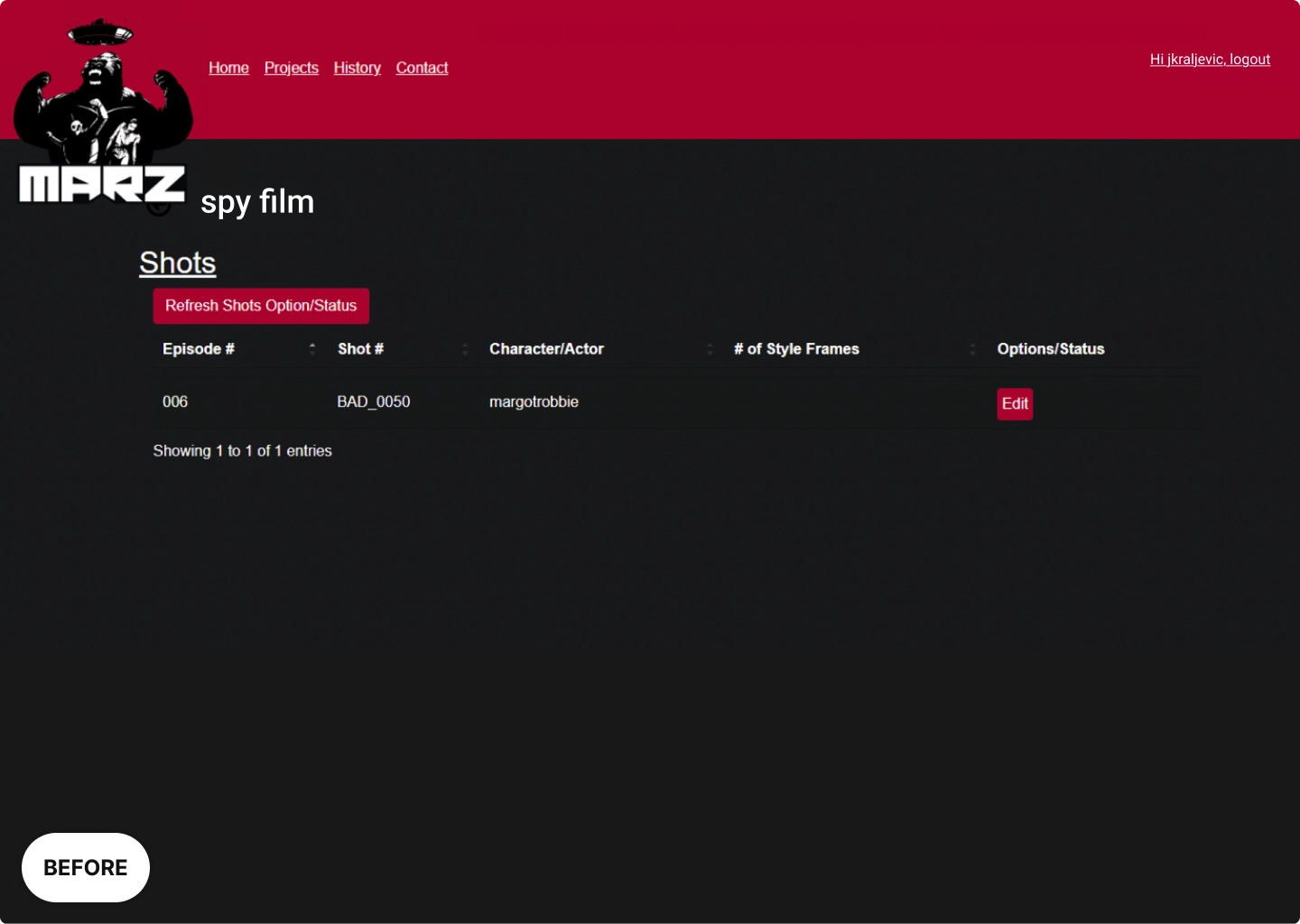
NOTE: a full redesign of the UI, including a separate component library were not in scope, much to my disappointment. But leadership liked the brand “red” and for the sake of this redesign, I kept it as-is.
THE RESULT?
After I handed off spec’d designs to engineers to implement, artists could manage their projects much faster, and each shot provided feedback to reduce wait time by 50%.

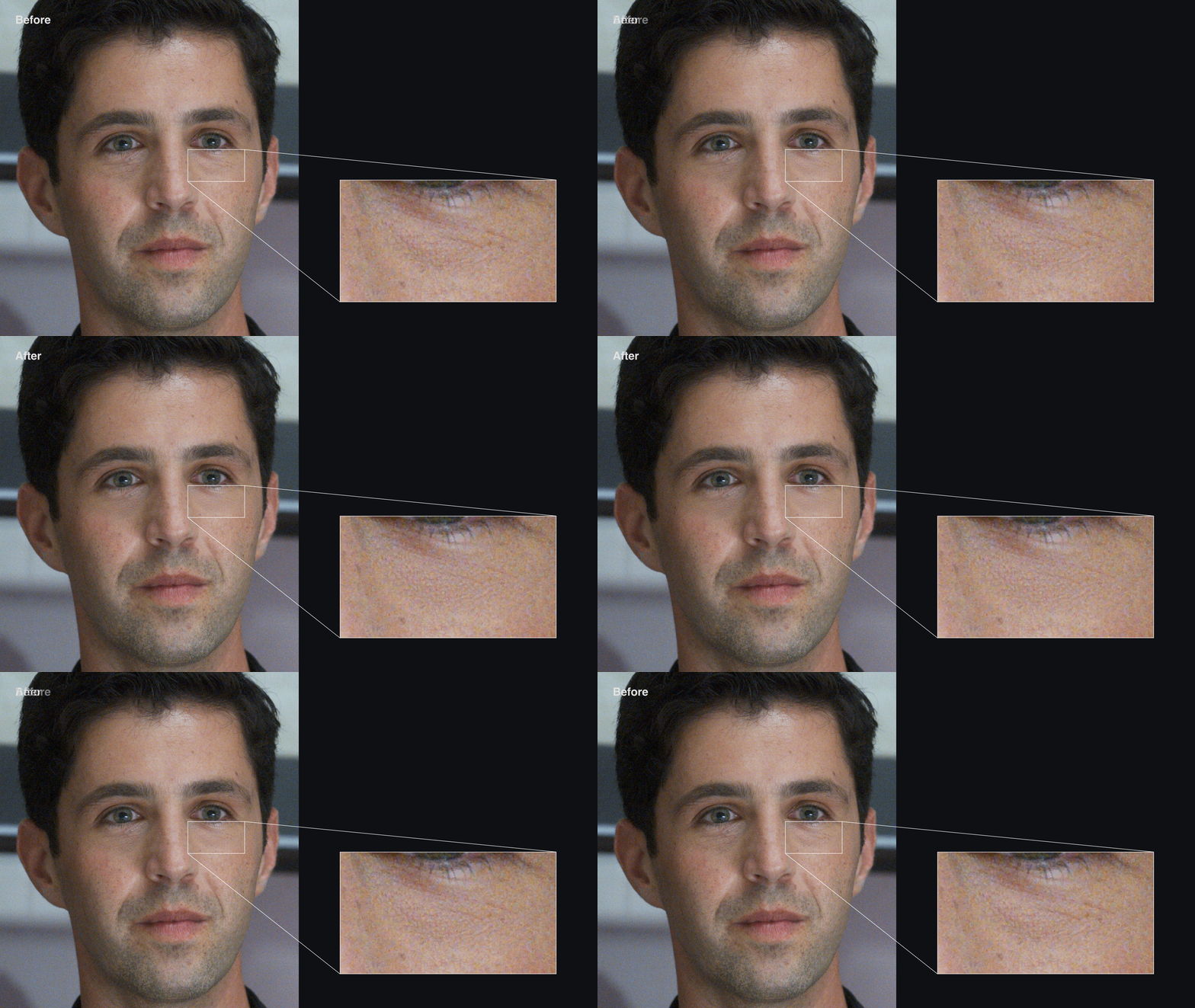
Next up? Allowing more control over editing the skin texture settings.
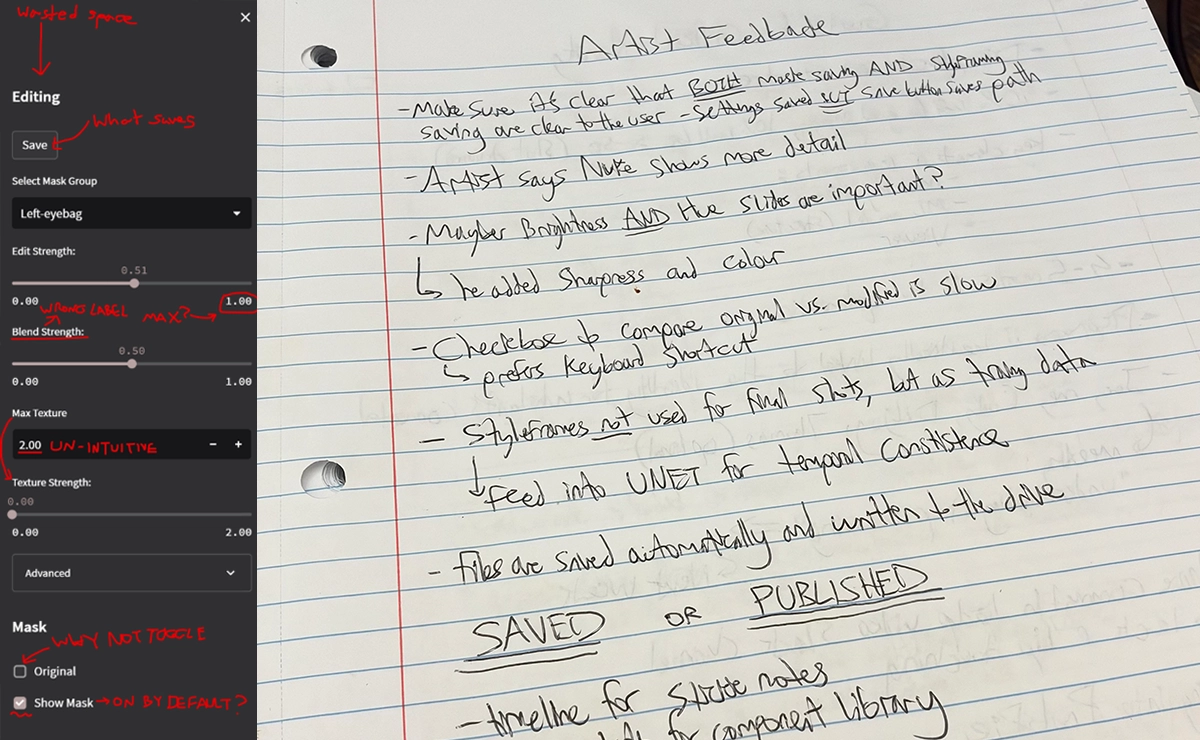
I prioritized this because it was the second most problematic step in the flow that made it harder for VFX artists to work with. Artists needed to see quick feedback in the viewing panel, to tell if their smoothing adjustments were correct.
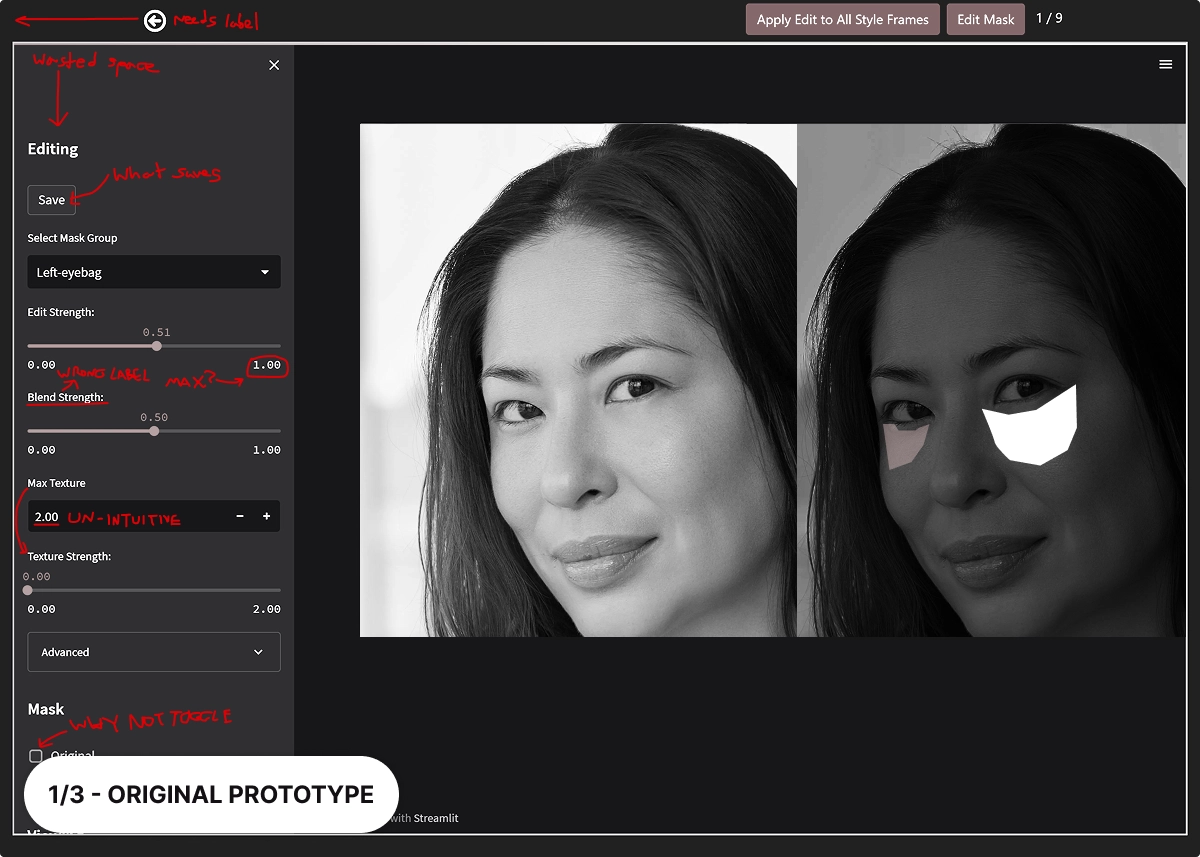
“I’m not sure what this label means or what it does to the masked layer.”
“What if I want to apply more blur? How do I push the settings like I can in Nuke?
“Why is the texture slider here, but the strength is in a different location?
THE METHOD
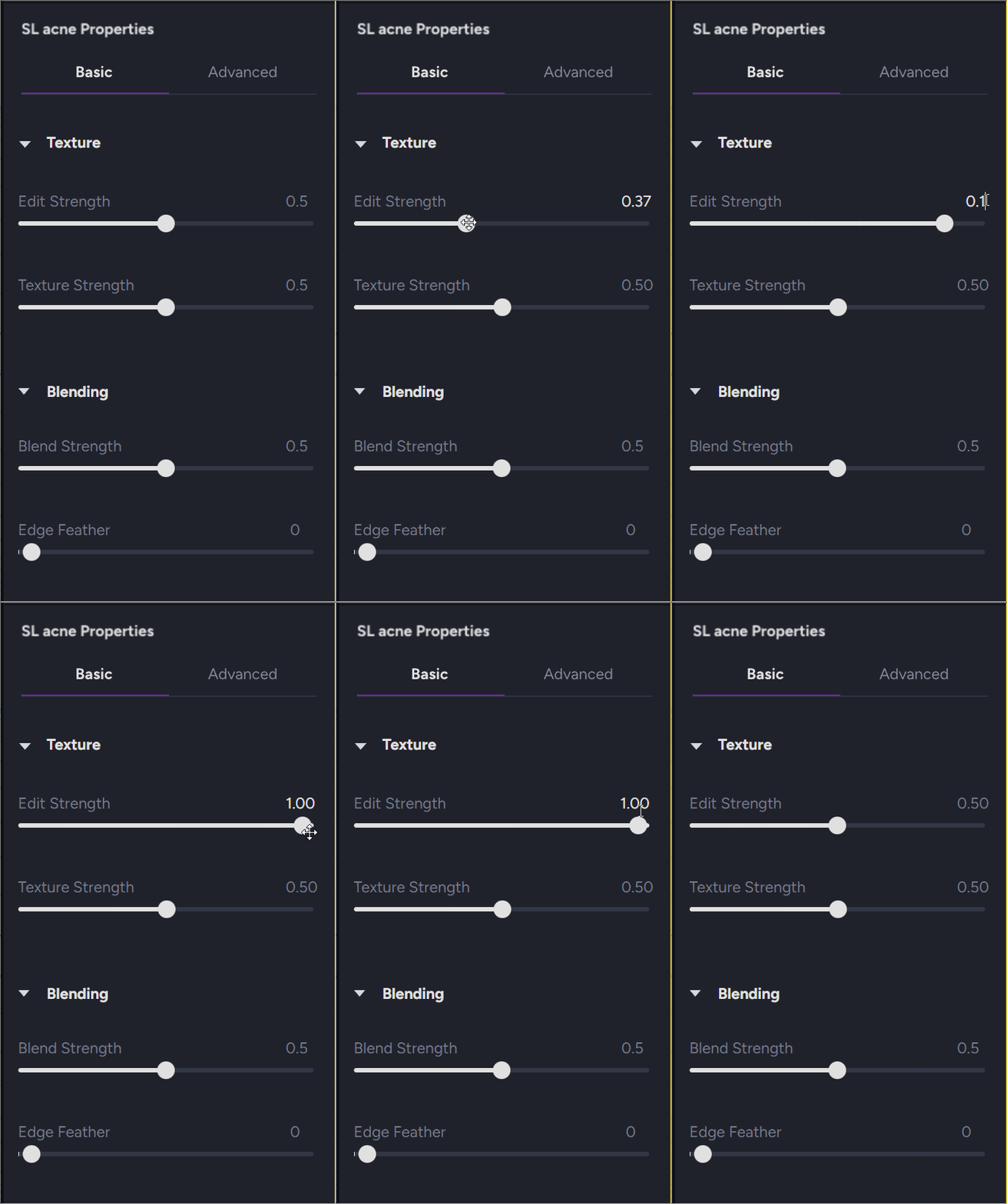
I used card sorting and the ‘Law of Similarity’ to group sliders by their related functions (Texture and Blending). Then, I prototyped the slider animations in Axure to see if they made sense for artists.
IMPORTANT TRADEOFF
Artists said they needed a faster method to “Degrain” footage before VFX was used to smoothen the skin. But it would take development time away from other areas in the application which needed more attention.
Unfortunately, creating a degrain ability from scratch, at the level that artists required would push our launch window back, and it would be expensive to run in our render pipeline. Our margins were already quite thin.
WHAT CHANGED
After updating, the newly delivered panel reduced artists’ reliance on 3rd party tools. They made texture, skin detail and softness adjustments in record time.
- Moving the UI panel from the left to the right-side made it more similar to existing design patterns, for easier discoverability
- Grouping and renaming the labeled sliders allowed artists to access their settings faster
- Things like clearer statuses around save and copy functionality reduced artists retry and error rate
THE FINAL IMPROVEMENT
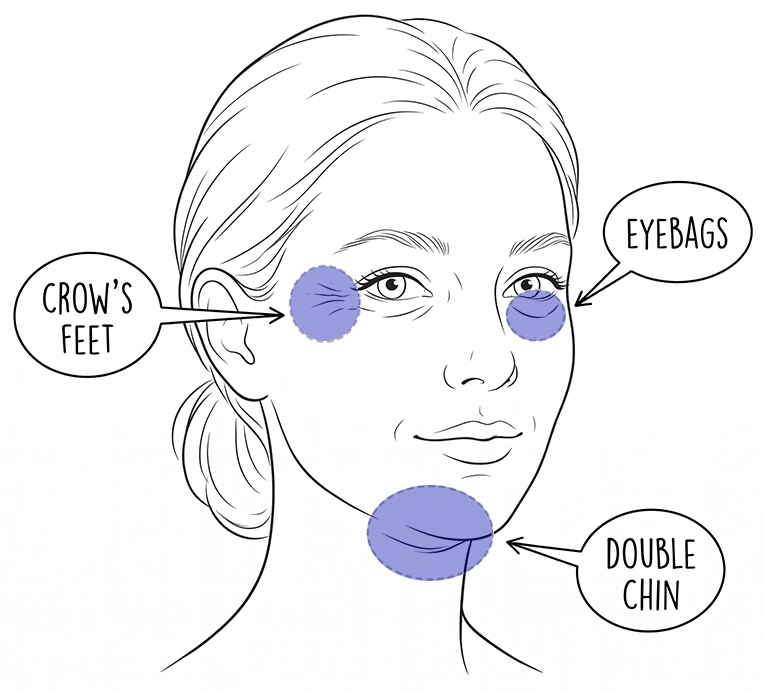
Lastly, VFX artists needed to reliably mask facial wrinkles 3 areas:
-
Eyebags
-
Crow’s feet
-
Double chin
CONSTRAINTS
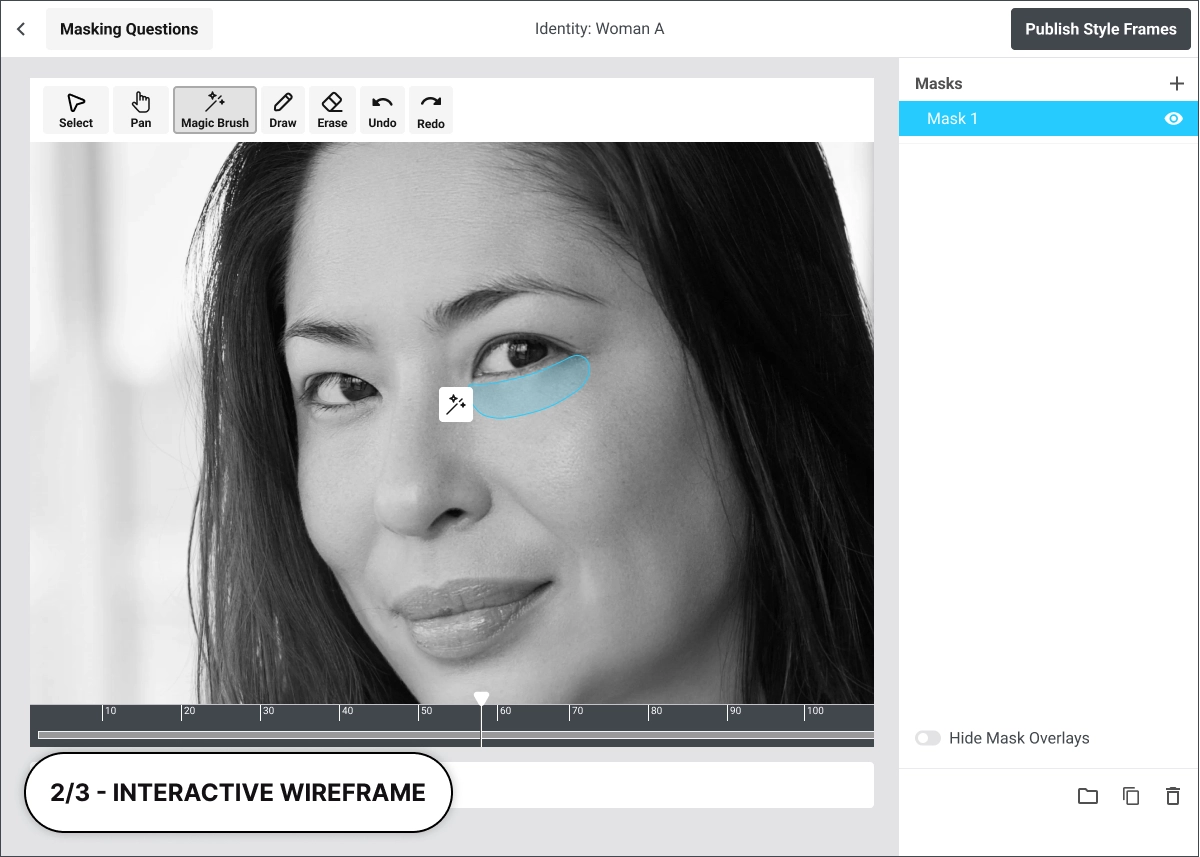
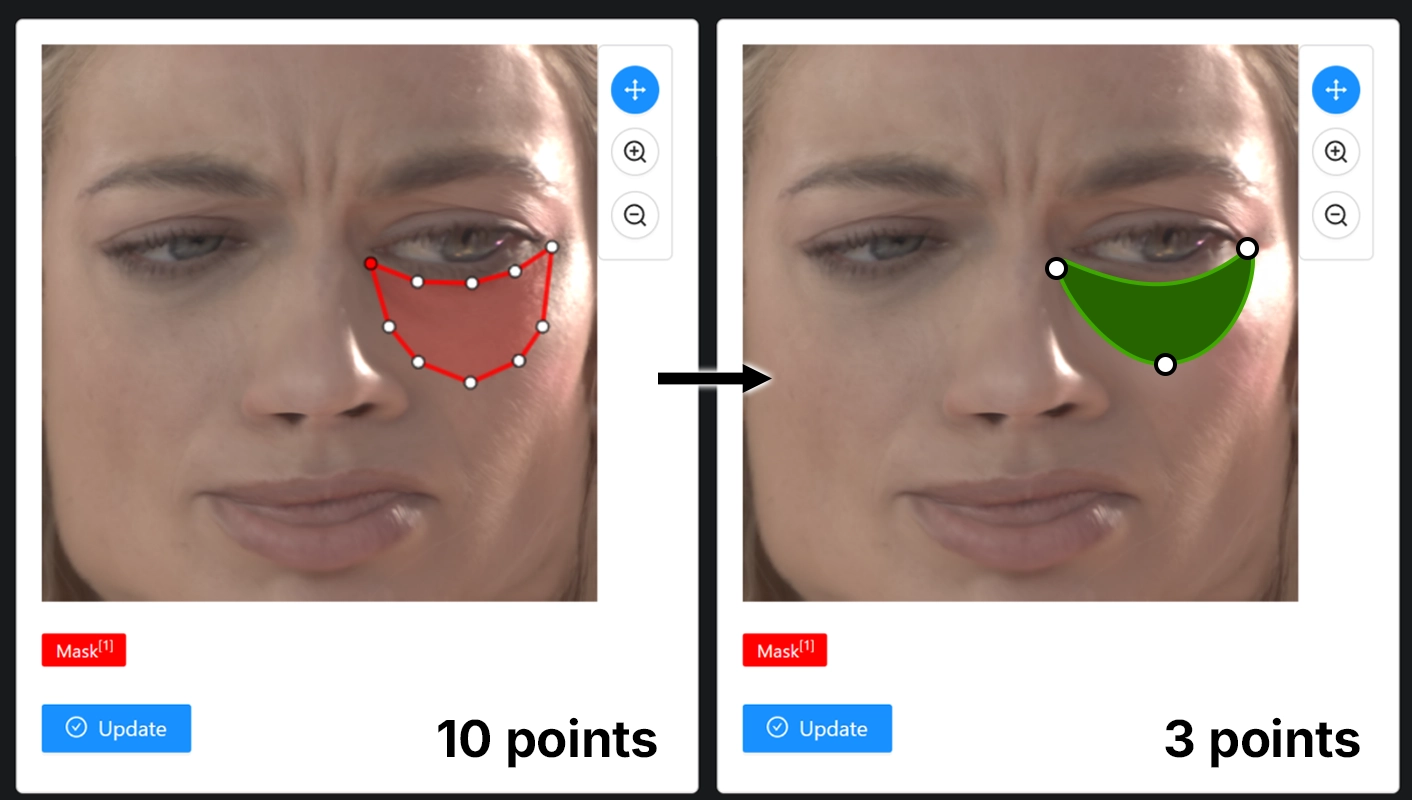
1. The original masks were polygons, and they needed bezier curves to round out the hard edges
2. I couldn’t use an off-the-shelf bezier masking tool – it had to be custom

INTERACTION DESIGN
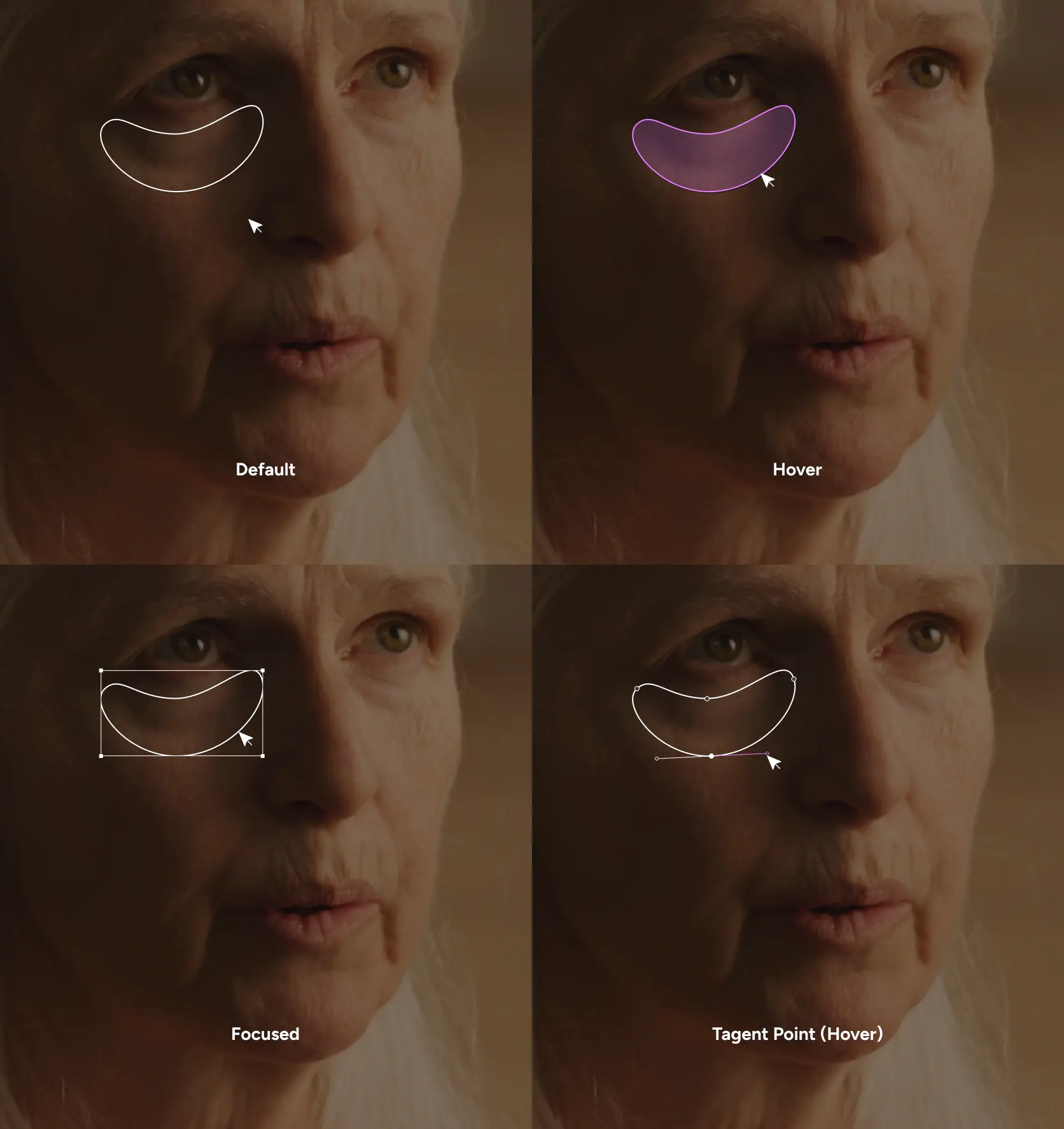
I researched competitive tools, consulted my users and specified the exact interaction design of the bezier tool in a Figma file, along with all of the states required for implementation by engineering.
THE IMPACT
How did the users respond? They loved how much faster it was to get to a professional result.
The VFX artists could quickly rough out regions with fewer points, smooth curves that once took ages, and as a bonus, reduce the number of styleframes they had to go in and manually adjust from an average of 10 per shot to less than 3.
ONE TRADEOFF: I designed a mask falloff design, but it didn’t make it into the final design. Why? It was too tricky to figure out the boolean logic which caused artifacts when the two edges intersected.

IN SUMMARY
Project setup allowed for faster starts on processed shots. Sliders worked as expected. The bezier mask improvements drastically decreased time spent fixing the output from the AI model.
As a side benefit, by switching from the off-the-shelf tool to custom built styleframe editor, it was easier for the dev team to build out custom enhancements.
Vanity never became a self-serve SaaS app. The Hollywood Writer’s Strike ended VFX work in 2023, and the company shifted attention to another Machine Learning app called LipDub AI.
But internally, MARZ VFX still used the tool to generate millions of dollars in profit on popular shows such as Wednesday, Ant Man: Quantumania and The Rings of Power.